Why 10 Minutes a Day Beats 10 Hours of Cramming: The Science Behind Microlearning
Spaced repetition improves retention by up to 200% over cramming. Here's the cognitive science behind why short daily sessions work for licensing exam prep.
The night-before-the-exam ritual
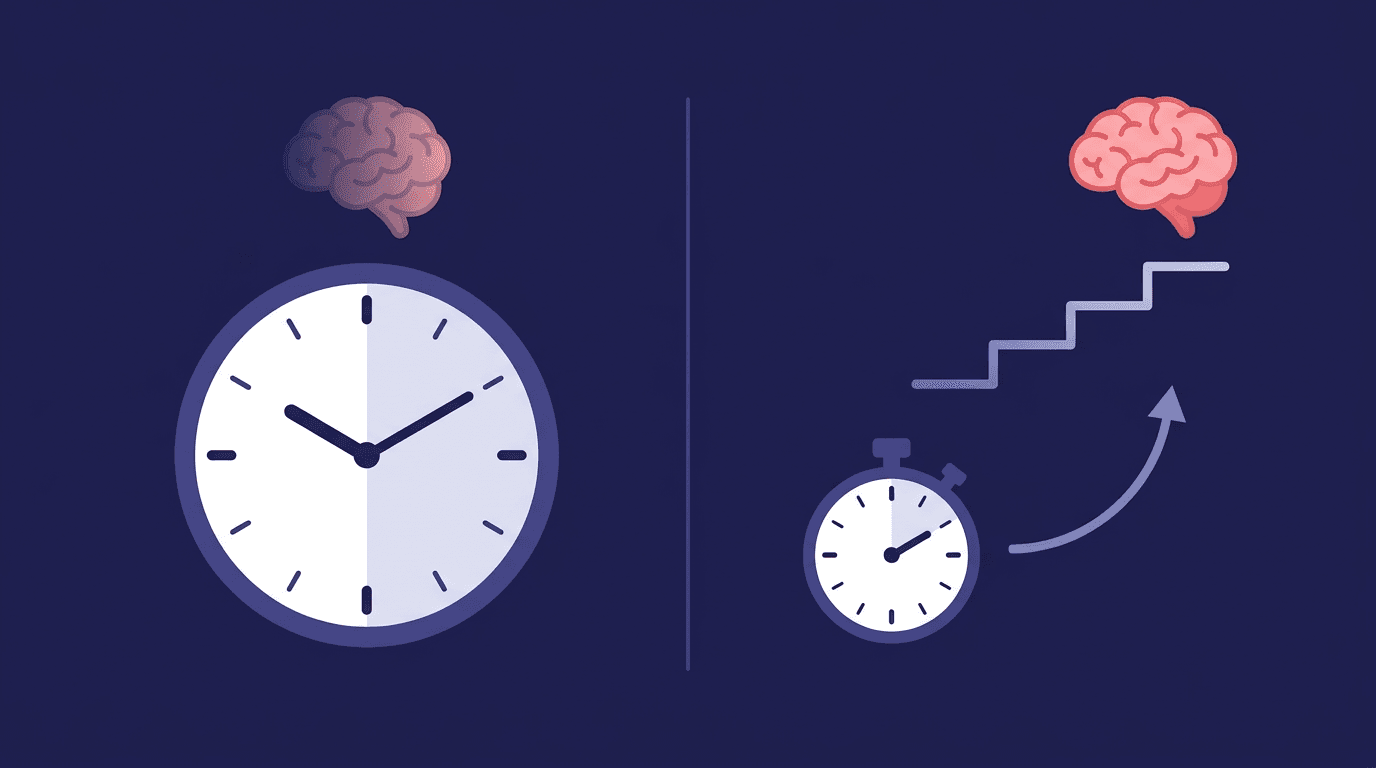
If you've ever crammed for a test, this scenario will feel familiar: it's late, you're surrounded by notes, and you're absorbing information as fast as possible. By midnight, everything seems to click. You feel ready.
Three weeks later, you can't remember any of it.
This isn't a personal failing — it's how human memory works. And for licensing exams, where you need to retain knowledge well enough to apply it under pressure, cramming is one of the least effective strategies you can use. Over 140 years of cognitive science research backs this up.
The forgetting curve: why you lose what you learn
In 1885, German psychologist Hermann Ebbinghaus discovered something uncomfortable: we forget roughly 70% of new information within 24 hours, and up to 90% within a week — unless we actively work to retain it.
This is the forgetting curve, and it's the reason that reading through 63 hours of pre-licensing material in a few weekends produces such poor results. By the time you sit for the exam, most of what you studied in Week 1 has evaporated.
But Ebbinghaus also discovered the antidote: reviewing information at specific, increasing intervals dramatically slows the rate of forgetting. This principle — spaced repetition — is the single most well-supported finding in learning science.
The numbers: spaced repetition vs. cramming
The research on this isn't subtle. According to a meta-analysis of 242 studies involving over 169,000 participants, distributed practice and practice testing (the two pillars of spaced repetition) emerged as the most effective learning techniques — with effect sizes well above the research average.
The retention gap is staggering:
- Students who crammed retained only 27% of course material after 150 weeks
- Students who used spaced repetition retained 82%
That's not a marginal improvement. It's a 200% increase in long-term retention.
For licensing exams — where you need to recall definitions, apply concepts to scenarios, and perform calculations under time pressure — the difference between 27% and 82% retention is the difference between passing and failing.
Active recall: the other half of the equation
Spaced repetition works best when combined with active recall — the practice of forcing yourself to retrieve information from memory rather than passively re-reading it.
This is why flashcards and practice quizzes are so effective, and why just reading slides isn't. When you see a question and have to generate the answer from memory, your brain strengthens the neural pathways associated with that knowledge. When you just read the answer, it barely registers.
A cohort study published in PMC found that medical students who used Anki — a spaced repetition flashcard app — scored significantly higher on the USMLE Step 1 licensing exam. Students who completed more spaced repetition reviews showed better long-term knowledge retention and integration compared to peers who relied on traditional study methods.
If it works for one of the hardest licensing exams in existence, it can work for real estate, insurance, and mortgage exams too.
Microlearning: making the science practical
Spaced repetition and active recall are powerful — but they require consistency. Studying for 10 minutes every day is more effective than studying for 5 hours every Saturday. That's where microlearning comes in.
Microlearning breaks content into short, focused lessons — typically 5 to 10 minutes — designed to be consumed on the go. It's not a watered-down version of "real" studying. It's the optimal format for how human memory actually works.
The data supports this across industries:
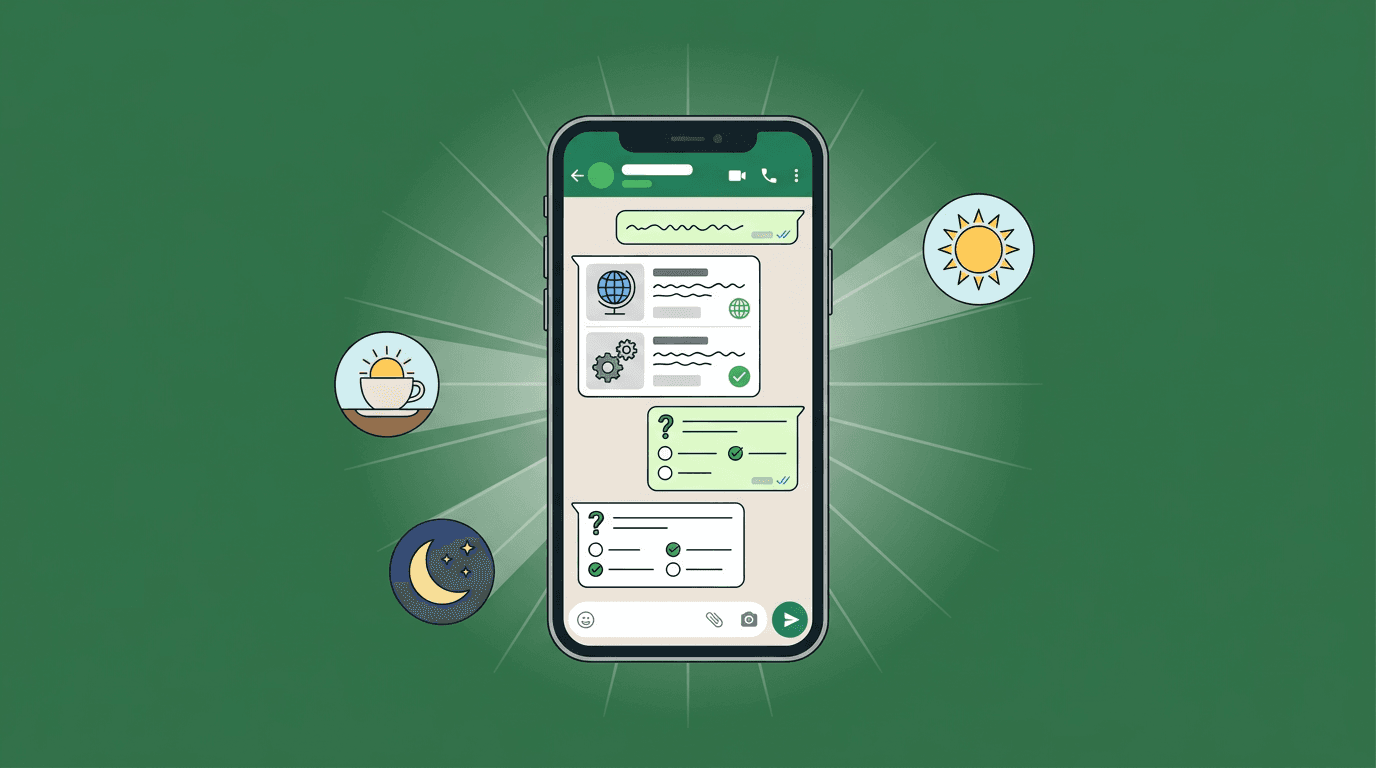
- 52% of mobile learners study after waking up and 46% before sleep — showing how naturally short sessions integrate into daily rhythms
- 74% of companies in North America now integrate mobile learning into their training strategies
- Walmart's microlearning program produced a 15% rise in knowledge retention and a 50% decrease in safety incidents, with 91% voluntary participation
WhatsApp microlearning: already proven
The idea of learning through a messaging app might sound unconventional, but it's already producing results in high-stakes professional environments.
In South Africa, a WhatsApp-based microlearning program for healthcare workers — called 6MMD — delivers training in sessions of "ten minutes maximum." Healthcare facility leads report that staff can learn without leaving their posts, fitting training into the natural flow of their workday.
A peer-reviewed study published in PMC surveyed doctors using WhatsApp for medical licensing exam preparation and found positive results for engagement and effectiveness.
Corporate training platform Kunjani integrated microlearning with WhatsApp and discovered use cases they hadn't anticipated — pre-workshop preparation, continuous learning content, and live interactive sessions — all driven by how naturally people engage with content in a messaging interface.
What this means for your licensing exam
You don't need to carve out 8-hour study blocks. You don't need to cram the weekend before your exam. And you definitely don't need to feel guilty about only having 10 minutes to study.
The science says those 10 minutes — used consistently, with spaced repetition and active recall — will get you further than a marathon session ever could. The key is doing it daily, having the content come to you in a format that makes it effortless, and trusting that small doses compound into deep knowledge over time.
Prentiz puts this science to work. Daily micro-lessons, adaptive quizzes, and spaced repetition — delivered to your WhatsApp. No app to download, no long sessions to schedule. Just consistent, research-backed learning in the moments that already exist in your day.