Why Pre-Licensing Courses Are Broken (and What Learners Actually Need)
Traditional pre-licensing courses are expensive, boring, and designed to meet hour requirements — not to help you pass. Here's what's wrong and what works instead.
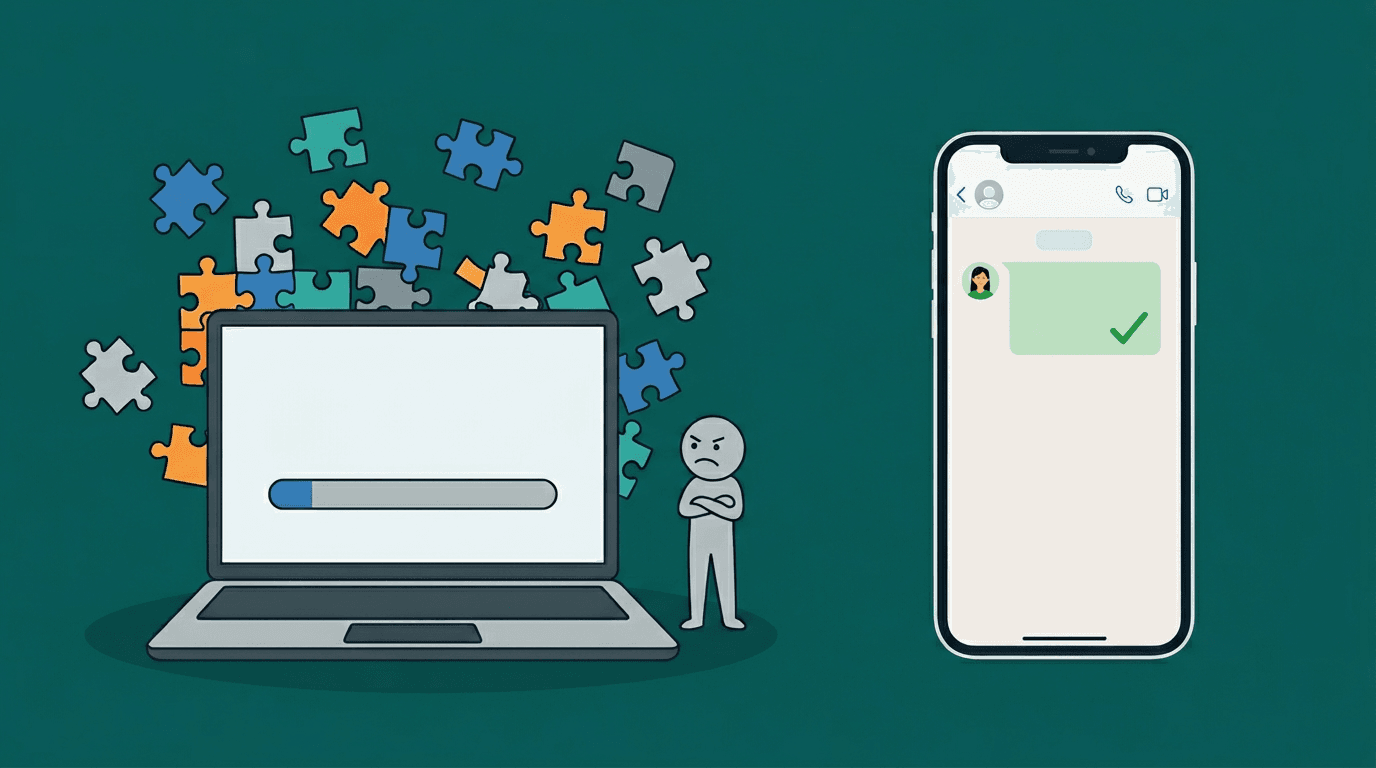
The dirty secret of pre-licensing education
Every state requires a certain number of education hours before you can sit for a licensing exam. Florida wants 63 hours for real estate. California requires 40 to 52 for insurance. The NMLS mandates 20 hours for mortgage loan originators. These requirements exist for good reason — regulators want to ensure candidates have a baseline understanding of their field.
But here's the problem: the courses built to meet those requirements are overwhelmingly designed to check a compliance box, not to help you actually learn. And the people taking them know it.
What learners are actually saying
Spend a few minutes on Reddit and you'll find a pattern that cuts across every licensing profession:
"I'm currently 10% through the pre-licensing course on The CE Shop and it seems to be a bunch of useless information I'll never use."
— r/RealEstate
"All the online courses suck. Just get through it and learn enough to pass the exam."
— r/realtors
"Why do all the licensing training platforms suck?"
— r/InsuranceAgent, on Property & Casualty and Life exam prep
"This is the worst online class ever. Horrible content, structure."
— r/RealEstate, on a major national provider
This isn't a fringe complaint. It's the dominant experience. And it has consequences: the national first-time pass rate for real estate exams is just 61.4% — despite every test-taker having completed mandatory coursework.
Three reasons the current model fails
1. Optimized for hours, not outcomes
Regulators measure education in hours. So course providers optimize for hours. The result is content that's padded, repetitive, and paced to fill time rather than build understanding. When your business model is "deliver 63 hours of content," the incentive is to make 63 hours of content — not to make content that takes less time because it teaches more efficiently.
Students sense this immediately. Many resort to clicking "next" through slides as fast as the platform allows, treating the course as a tollbooth rather than a learning experience. One Reddit user admitted to cheating through their entire pre-licensing course — and then panicked about the actual exam.
2. Passive content in an active-recall world
Most pre-licensing courses are built around slide decks, text chapters, and the occasional end-of-section quiz. This is passive learning — you read, you scroll, you occasionally answer a question to prove you were paying attention.
But licensing exams don't test whether you can recognize information. They test whether you can apply it. Examinees are regularly blindsided by situational questions — scenarios about what an agent should do when a broker's license expires, or how FHA rules interact with zoning laws. As one exam-taker on Reddit wrote after failing: "The questions were completely different than what I studied... a lot of questions were situational."
Cognitive science is clear on this: active recall — being forced to retrieve information from memory — is dramatically more effective than passive review. But most courses never force you to retrieve anything. They just ask you to keep scrolling.
3. Format mismatch with how adults actually learn
The typical pre-licensing course is designed for marathon sessions. Log in, spend 3 to 8 hours clicking through modules, log out, repeat on the weekend. This is the opposite of how adult brains retain information.
Research consistently shows that distributed practice — spreading study across many short sessions — produces far better retention than cramming. But the course model doesn't support that. It's built around "seat time," not learning science.
On top of all this, courses cost $140 to $650 for real estate, $200 to $400 for mortgage, and $100 to $300 for insurance. That's a lot to pay for an experience that most students describe as something to endure, not something that helps them pass.
What good learning actually looks like
The science on effective exam prep is well-established. Good learning does four things:
- Uses active recall: Quizzes, flashcards, and practice questions that force you to retrieve information — not just recognize it.
- Spaces repetition over time: Short sessions spread across days and weeks, not weekend marathons. Spaced repetition can improve retention by up to 200% compared to massed practice.
- Adapts to your weak spots: The best prep programs use adaptive engines that reshape your study plan based on what you're getting wrong — not a one-size-fits-all curriculum.
- Fits into real life: Adults don't have 8-hour study blocks. Effective prep has to work in 5 to 10 minute windows — on the bus, during lunch, before bed.
These aren't fringe ideas. The highest-rated exam prep programs in 2026 already use adaptive study engines and spaced repetition. The question is why most pre-licensing courses still don't.
Rethinking prep from the ground up
Pre-licensing courses aren't going away — state requirements guarantee that. But there's a growing gap between what regulations require and what learners actually need to pass their exams and start their careers.
Prentiz was built to close that gap. Instead of hours-long sessions you have to endure, Prentiz delivers daily micro-lessons and adaptive quizzes straight to your WhatsApp — designed around how your brain actually learns, not how many hours a regulator wants you to sit. It's exam prep that teaches you to pass, not just to complete hours.